
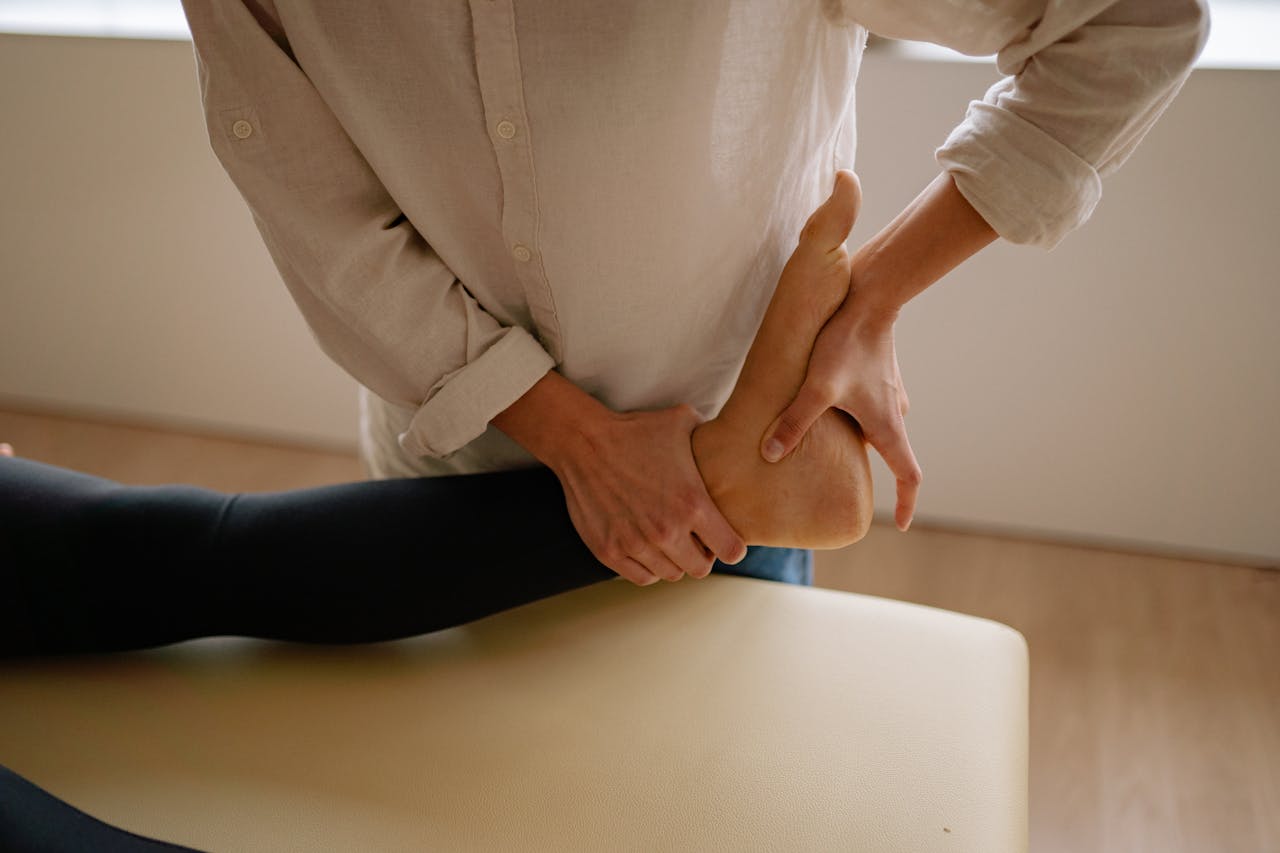
Guest Contributor: AJ Kirkpatrick, PT, DPT, Owner of Kinetik Performance and Rehab
Foot and ankle conditions are commonly treated with a combination of accurate diagnosis, imaging, orthotics, injections, and medical management. In many cases, this approach leads to meaningful symptom relief. However, some patients continue to experience lingering pain, stiffness, or recurring flare-ups even after appropriate podiatric treatment.
When symptoms persist, the issue is often not the structure itself, but how the foot and ankle are being loaded during daily movement.
Why Foot and Ankle Pain Does Not Always Fully Resolve
Pain may improve initially but return when walking volume increases, exercise resumes, or standing demands rise. In these situations, the underlying contributor is frequently related to movement mechanics, strength deficits, or reduced tissue capacity rather than unresolved pathology.
Common contributing factors include limited ankle mobility, weakness in the foot or lower extremity, altered gait mechanics, and poor force distribution during walking or running. Without addressing these factors, symptoms can persist or recur despite otherwise successful treatment.
The Role of Movement Mechanics in Foot and Ankle Health
The foot and ankle do not function in isolation. They respond to forces generated throughout the entire kinetic chain, including the hips, knees, and trunk. When movement patterns are inefficient or strength is insufficient, excessive stress is transferred to the foot and ankle.
Physical therapy clinics that specialize in movement analysis and orthopedic rehabilitation, such as Kinetik Performance and Rehab in Mission Viejo, focus on identifying these movement-related contributors and addressing them directly through targeted treatment plans.
Learn more at: https://www.kinetikpar.com
How Physical Therapy Complements Podiatric Care
Physical therapy plays an important complementary role by addressing how the body moves and adapts to load. Once structural concerns are managed and symptoms are stable, physical therapy focuses on restoring function and building resilience.
This may include improving joint mobility, strengthening the foot and lower extremity, correcting compensatory movement patterns, and gradually increasing tolerance to walking, running, or sport-specific activity. Programs centered on foot and ankle–focused orthopedic rehabilitation help patients translate medical treatment into meaningful, real-world function.
The goal is not simply short-term pain relief, but lasting improvement that supports confident movement and long-term foot and ankle health.
Learn more at: https://www.kinetikpar.com/orthopedic-programs
When Patients Benefit Most From Physical Therapy
Patients often benefit from physical therapy when pain returns after initial improvement, when imaging findings do not fully explain ongoing symptoms, or when orthotics and medical treatment reduce pain but do not fully restore function.
Individuals with recurrent injuries, limited activity tolerance, or difficulty returning to work, sport, or recreational activity often require a more comprehensive injury prevention and movement-based rehabilitation approach, which physical therapy is uniquely positioned to provide.
Learn more at: https://www.kinetikpar.com/injury-prevention
A Collaborative Approach to Better Outcomes
Collaboration between podiatrists and physical therapists allows patients to receive comprehensive care that addresses both medical and movement-related factors. Podiatric expertise manages diagnosis and structural concerns, while physical therapy focuses on restoring strength, mechanics, and load tolerance.
This team-based approach often leads to improved outcomes, fewer recurrences, and greater patient confidence throughout the recovery process.
Supporting Long-Term Foot and Ankle Health
Persistent foot and ankle pain can be frustrating, particularly when symptoms continue despite appropriate treatment. Addressing movement quality, strength, and biomechanics is often the missing piece that allows patients to progress from symptom management to lasting recovery.
When podiatric care is combined with movement-focused physical therapy, patients are better equipped to restore function, return to activity, and reduce the risk of recurrence.
For patients who have questions about whether physical therapy may be appropriate, or who are seeking a movement-based approach to foot and ankle rehabilitation, additional information is available through Kinetik Performance and Rehab. Our team works collaboratively with referring providers to support long-term outcomes and patient confidence.
To learn more or to schedule an evaluation, visit: https://www.kinetikpar.com/contact